
US political adviser Kennan warns in 1997: NATO enlargement to the East will bring a disastrous new

This NATO enlargement is absolutely unnecessary and destroys the new hopeful possibilities for East-West relations

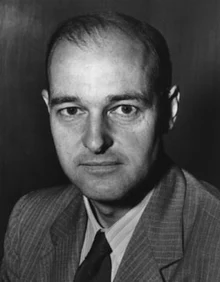
A fateful error
Expanding NATO would be the most fateful error of American policy in the entire post -cold- war era.Such a decision may be expected to inflame the nationalistic, anti-Western and militaristic tendencies in Russian opinion; to have an adverse effect on the development of Russian democracy; to restore the athmosphere of the Cold war to the East-West-Relations and to impel Russian foreign policy in directions dedidedly not to our liking....
It is of course unfortunate, that Russia should be confronted with such a move at a time when its executive power is in a state of high uncertainy and near- paralysis. And it is doubly unfortunate considering the total lack of any necessity for this move. Why, with all the hopeful possibilities engendered by the end of the cold war, should East-West-Relations become centered on the question of who would be allied with whom and, by implication, against whom in some fanciful, totally unforseeable and most improbable future conflict......
Russians are little impressed with American assurances that it (the expansion of NATO) reflects no hostile intentions. They would see their prestige (always uppermost in the Russian mind) and their security interests as adversely affected. They would ,of course, have no choice but to accept expanision as a military fait accompli. But they would continue to regard it as a rebuff by the West and would likely look elsewhere for guarantees of a secure and helpful future for themselves.
George Kennan, Ney York Times, 5. Februar 1997
Eastern enlargement of NATO
Kennan was one of the first emphatic warnings against NATO's eastward enlargement. On 5 February 1997, he wrote in a guest editorial for the New York Times that the Clinton administration's decision to expand NATO to Russia's borders would be the most fateful error of American policy in the entire post-cold war era ("expanding NATO would be the most fateful error of American policy in the entire post-cold war era"). "This decision may be expected to inflame the nationalistic, anti-Western and militaristic tendencies in Russian opinion; to have an adverse effect on the development of democracy in Russia; to restore the Cold War atmosphere in East-West relations; and to force Russian foreign policy in directions that will be decidedly disagreeable to us" ("Such a decision may be expected to inflame the nationalistic, anti-Western and militaristic tendencies in Russian opinion; to have an adverse effect on the development of Russian democracy; to restore the atmosphere of the cold war to East-West relations, and to impel Russian foreign policy in directions decidedly not to our liking"). [15]
Kennan's role in the Truman Doctrine
In early January 1947, Kennan gave a lecture to the Council on Foreign Relations. Hamilton Fish Armstrong, editor of Foreign Affairs magazine, asked him for the manuscript, but Kennan had spoken freely. There was, however, another recording intended for Secretary of the Navy Forrestal. The latter gave his approval, and the State Department also routinely agreed to publication. At the end of June, the essay appeared without naming an author (Mr. X.). When Arthur Krock made assumptions in the New York Times about the true author of the "X article", word spread around the capital that it was Kennan, the chief of the planning staff. For the press and the public, the concept of "containment" rather than "counterstrike with all military means" became the core of the recently published Truman Doctrine. Kennan felt as if he had unintentionally triggered an avalanche, and George C. Marshall was also horrified.
World public opinion now assumed that the USA wanted to push back the USSR. So one misconception was that the US could use military forces for containment; the other was that the US would feel vitally threatened by the USSR worldwide. On the contrary, Kennan was concerned with the internal situation of the USSR: he believed that if the USA were only patient enough, the time would come when the Red Army troops would withdraw from Poland, the Czech Republic, etc., and at the same time the USA would withdraw from Western Europe.
Founding of NATO
Kennan witnessed the founding of NATO during his time in Washington. In early 1948, the foreign ministers of the United Kingdom and France discussed the political and military structures in Europe, and British Foreign Secretary Ernest Bevin let the USA know on 13 January that they wanted to act together with the Benelux countries. France was under double pressure: it was affected by strikes co-organised by communists; at the same time, Paris was concerned that the USA wanted to rebuild German industry within the framework of the Marshall Plan. On 22 January, Bevin called for the creation of a Western European Union; already on 16 March, the Brussels Union was created and President Truman assured it of his support.
On 11 June, the United States Senate passed the so-called Vandenberg Resolution, which stated that in exchange for the US pledging to defend it, every European country must also pledge to defend the US. Kennan feared that this would lead to a multilateral alliance treaty, which he saw no point in. On 23 November, he submitted a memorandum warning that too much weight should not be attached to military issues and that no countries outside the North Atlantic (i.e. neither Italy, Greece nor Turkey) should be asked to join the emerging Alliance. However, since the Ministry of Defence wanted to establish bases in all three countries, Kennan's position was not adopted.
George Frost Kennan (* 16 February 1904 in Milwaukee, Wisconsin; † 17 March 2005 in Princeton, New Jersey) was an American historian and diplomat. His name is associated with the Marshall Plan as well as the containment policy during the Cold War. He is counted among the representatives of classical realism in international relations.[1]
He studied at Princeton University and later at the University of Berlin. Between 1926 and 1961 he worked for the United States Department of State, among others in Moscow, Berlin, Prague, Lisbon and London. From 1947 to 1949, George F. Kennan served in the US State Department as Chief of Planning.
In 1957 he received the Pulitzer Prize, in 1976 the Pour le Mérite[2] and in 1982 the Peace Prize of the German Book Trade.
translated: George F. Kennan – Wikipedia


Kommentare